_edited.png)
CARLOTA JOSEFINA BÉRARD’S BURNED BUTTER ISLAND: A POETIC JOURNEY FROM GRIEF TO LOVE - VORAKA

Carlota Josefina Bérard is an artist and poet whose creative work moves naturally between literature, visual art and the emotional landscapes of human experience. Born in Mexico in 1979, Bérard has built a multidisciplinary artistic practice shaped by poetry, contemporary art and her interest in the many ways stories and images can express what words sometimes cannot.
She holds a Ph.D. in Drama and Contemporary Art from the University of Exeter in England and has developed her work across different artistic forms. As an author, she has written Greta Legris, Blanco, Jardín Cerrado, and the poetry collection The Blue Whale Sings From Afar. Her latest work, Burned Butter Island, brings together many of the elements that have become central to her artistic expression: poetry, imagery, nature, mysticism and the exploration of deeply human emotions.
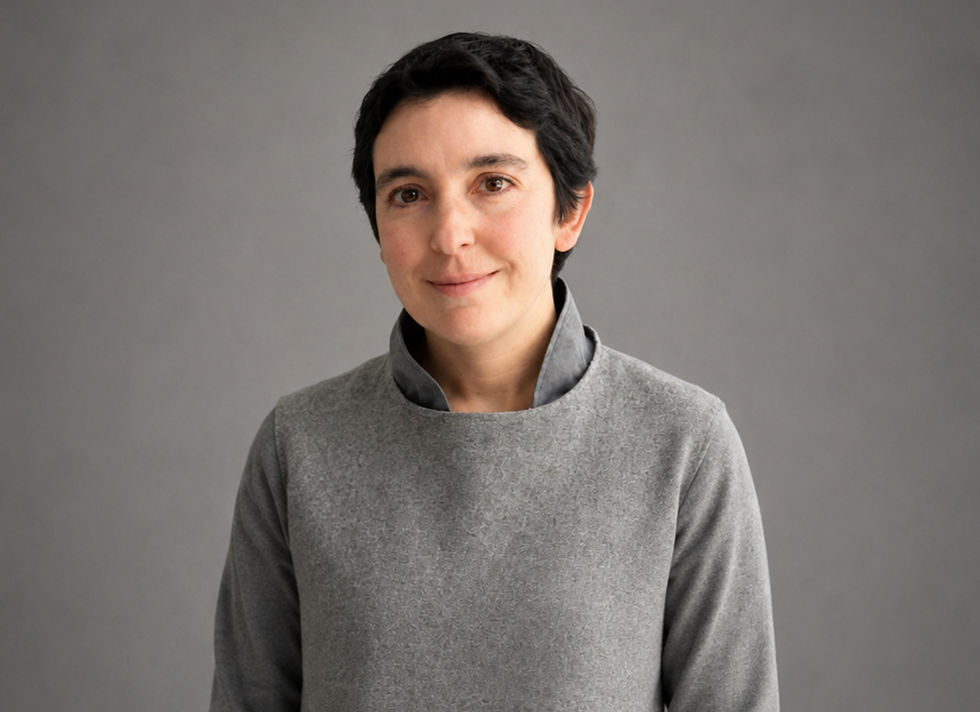
Bérard also illustrated Burned Butter Island herself, creating a close relationship between the written story and its visual world. Her approach reflects the way she sees art more broadly, through images, feelings, colours, shapes and rhythms. Rather than existing separately, her writing and visual art seem to speak to each other.
At the centre of Burned Butter Island is a young boy learning to live with the loss of his mother. He lives on a small island with his sailor father, a grey cat named Bell and a white duck named Snow. Surrounded by forests, the sea and the changing seasons, he moves through a world where memories and imagination become part of his journey.
The story introduces several mystical elements, including a white deer and a mysterious narwhal. These encounters add a dreamlike quality to the fairytale while also reflecting Bérard's interest in mysticism and symbolism.
The white deer holds a particularly personal meaning for the author. Bérard has spoken of encountering a white deer in a forest at a time when her mother had died, an experience that remained with her. The narwhal, often called the unicorn of the sea, also carries symbolic meaning within the story, connected to healing, intuition and inner truth.

Through these elements, Burned Butter Island becomes more than a traditional children's fairytale. It is a story about grief, but also about what can come after grief, acceptance, hope, joy and love. The emotional heart of the book is closely connected to Bérard's own experience of loss. After the death of her mother, she says she could not write for a year and thought she would never write again. Yet, eventually, she returned to writing, and Burned Butter Island appeared.
That connection gives the story a quiet emotional honesty. It does not try to remove sadness from the experience of loss. Instead, it allows grief to exist alongside beauty, memory and love. For Bérard, storytelling and art are also forms of therapy. She believes that through artistic expression, feelings can be released and pain can be transformed into something beautiful, comforting, hopeful and loving. Her Catholic faith, particularly her connection to Jesus and the Virgin Mary, is also an important source of this perspective.
Poetry has always been an important part of Bérard's creative identity. Her collection The Blue Whale Sings From Afar explores imagery, nature and emotion through a poetic lens, and the book, like Burned Butter Island, received a Literary Titan Book Award. Her love of poetry can also be felt in the language of Burned Butter Island. The story is filled with natural imagery, the sea, forests, animals, seasons and light, creating a world that feels almost like a poem brought into visual form.
For Bérard, this connection between disciplines is instinctive. She sees imagery and feelings as something that can be expressed through different mediums, whether through letters, colours, shapes or rhythms.
Although Burned Butter Island can be read as a children's fairytale, its themes reach beyond childhood. The story speaks to anyone who has experienced loss, remembered someone they love or searched for a way to move through sadness. A child may discover the magic of the island, the animals and the mysterious encounters, while an adult may connect more deeply with the themes of grief, memory, healing and life after death. This openness allows the story to be experienced differently by every reader.
At its heart, Burned Butter Island carries a simple message: grief may change us, but love remains. Through the boy's journey, Bérard explores the possibility of moving from sorrow towards joy without leaving love or memory behind. Today, Bérard lives in Vienna, Austria, with her son, husband and dog. Her life and work continue to exist between cultures, disciplines and forms of expression. With Burned Butter Island, she brings together her identities as poet, artist, writer and illustrator in one intimate work. The result is a poetic fairytale that approaches loss with tenderness and leaves space for hope.
For Carlota Josefina Bérard, art is ultimately about feeling, listening and expressing what lives within. Burned Butter Island carries that philosophy into a story that invites both children and adults to look at grief not only as an ending, but as part of a larger journey towards healing, joy and love. Burned Butter Island and The Blue Whale Sings From Afar are available in paperback and Kindle editions through Amazon.
EXCLUSIVE INTERVIEW WITH AUTHOR CARLOTA JOSEFINA BERARD
What first sparked the idea behind Burned Butter Island?
My son. He asked me to write him a fairytale and to illustrate it. Thanks to him, Burned Butter Island appeared. It was his request that opened the door to this story, and I am very grateful to him for that.
Why do themes of grief, silence, and healing appear so often in your work?
Because all these aspects, we find them in life. Grief and suffering are inevitable, and they are part of our human experience. In silence, we human beings can listen to our heart, to God, and heal. Ultimately, healing is about love. When we are in health and in harmony, we are in peace, joy and love. Deep down, we all desire that.
How do you transform painful emotions into something beautiful and comforting through storytelling?
Storytelling is therapeutic. Any discipline in art is a form of therapy where you can release your feelings. Particularly, transmuting pain into something beautiful, comforting, into hope, into love, comes from my Catholic faith in God, Jesus and His Mother, Mary, and the deep love I feel from Him and Her for all of us human beings. This is what helps me transform pain into something that can bring comfort and hope.
What inspired the mystical elements in the story, like the white deer and the narwhal?
I love mysticism. I once encountered a white deer in a forest and it was precious. I felt it carried a special message for me at that moment. My mother, whom I loved so much, had died around that time, so this experience stayed deeply within me. Narwhals, also called unicorns of the sea, love the cold Arctic waters and are timid. I am like that. Their symbolism is power to heal your heart, intuition, inner truth. All these elements are within Burned Butter Island.
How does your background in contemporary art influence the way you build fictional worlds?
Through images. At the end, it is all imagery and feelings, just expressed with different mediums: letters, colours, shapes, rhythms. For me, these elements are connected. Whether through art or writing, I am expressing imagery and feelings in different ways.
What was more emotionally challenging, writing the story or illustrating it?
Writing it. I could not write for one year after the death of my mother. I thought I would never write again. It was a very difficult time for me. Yet I did, and Burned Butter Island appeared.
How do you want children and adults to experience the story differently?
Each person, no matter the age or sex, feels different things and that is wonderful, precious. Everyone can connect with the story in their own way. At the end, what matters to me is to share the message of hope, life after death and transmuting grief into joy and love. I desire Burned Butter Island gives that to the reader.
What role does poetry play in the way you write fiction?
All. I love poetry, the musicality, imagery, depth of its essence. It whispers to me unconsciously. I think poetry is very much connected to the way I feel and express things, even when I am writing fiction.
How has living between different cultures shaped your artistic identity?
Opening different doors, windows, new ways of seeing life, feeling, understanding. It allows you to experience different perspectives and ways of being. It is tremendously and deeply enriching, a blessing.
What draws you to stories that blend melancholy with hope?
Melancholy is inevitable in life, but we should not remain there. We should all try to overcome it, learn from it and move into joy, light, hope and love. I believe there is always the possibility of moving from melancholy towards something lighter and more beautiful.
How do your personal experiences find their way into your characters and imagery?
Unconsciously, I do not plan it. I just sit and start to draw and write. But I believe it is the meditation, prayer, silence, I love and practise. You can know yourself more within these practices and listen to your inner truth, to your heart, to God. Perhaps this is why my experiences naturally find their way into what I create.
What kind of conversations do you hope Burned Butter Island starts among readers?
Of LOVE. I would love the story to open conversations about love, hope, healing, grief and life after death. But ultimately, of LOVE.


Comments